Cheapest protein in India: how many grams does ₹10 buy?
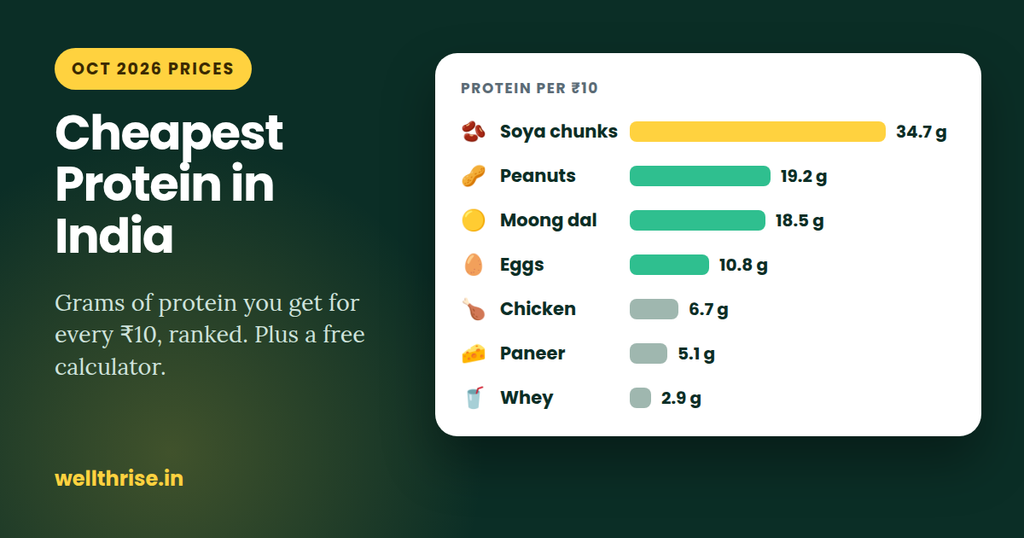
Looking for the cheapest protein in India? We ranked 13 everyday Indian foods by grams of protein per ₹10, using October 2026 prices. The winner costs a fraction of paneer or whey, and it’s probably already in your kitchen.
- Cheapest overall: soya chunks, then peanuts, moong dal and kala chana: 18–35 g protein per ₹10.
- Cheapest complete animal protein: eggs, about 11 g per ₹10, roughly double paneer, milk or chicken.
- Most expensive per gram: whey protein, paneer and curd. They’re convenient, but you pay for it.
- Smart combo: dal + roti or rice gives you a complete protein for very little money.
Protein per ₹10 calculator
Your cheapest protein in India, ranked automatically. Prices are typical October 2026 retail rates, so edit any price to match your city and the ranking updates instantly.
“Daily cost” is what it would cost to get your full day’s protein from that one food alone. It’s for comparison only, since a real diet mixes several sources. Protein values are per 100 g as bought (raw or dry where relevant), based on Indian food composition tables. Chicken is curry cut with bone, so less of each kg is edible meat.
Cheapest protein in India: the full table
| Food | Typical price (Oct 2026) | Protein per 100 g | Protein per ₹10 |
|---|---|---|---|
| Soya chunks (dry) | ₹150/kg | 52 g | ~35 g |
| Whole wheat atta | ₹45/kg | 12 g | ~27 g* |
| Peanuts (raw) | ₹130/kg | 25 g | ~19 g |
| Moong dal | ₹130/kg | 24 g | ~18 g |
| Kala chana (whole) | ₹110/kg | 19 g | ~17 g |
| Rajma | ₹150/kg | 22 g | ~15 g |
| Sattu (chana) | ₹150/kg | 21 g | ~14 g |
| Eggs | ₹70/dozen | ~6.3 g per egg | ~11 g |
| Chicken (curry cut) | ₹240/kg | ~16 g as bought | ~7 g |
| Milk | ₹60/litre | 3.3 g | ~5.5 g |
| Paneer | ₹350/kg | 18 g | ~5 g |
| Curd | ₹71/kg | 3.5 g | ~5 g |
| Whey protein | ₹2,800/kg | ~80 g | ~3 g |
*Atta is cheap per gram, but wheat protein lacks lysine and comes with lots of carbs, so pair it with dal or curd rather than relying on it. Egg, milk and dairy prices: NECC and retail listings, 9 October 2026. Other prices: typical 2026 retail ranges; your local price may differ.
How to use this, by budget and diet
🌱 Vegetarian on a budget
A bowl of soya chunk curry + dal + 2 rotis + a glass of milk gets most adults close to 60 g a day for well under ₹40.
🥚 Eat eggs?
3 eggs a day give ~19 g of complete protein for about ₹18. That’s the best value for money among animal proteins.
🏋️ Gym-goer (1.6 g per kg)
Build your base from soya, dal, eggs and milk. Whey is convenient after a workout, but it’s the costliest protein per gram on this list.
👨👩👧 Feeding a family
Peanuts, sattu and kala chana make cheap, high-protein snacks for kids instead of biscuits and namkeen.
- Eggs, milk, curd, paneer, chicken, whey and soya contain all the essential amino acids.
- Dals and grains each lack one or two, but eaten together (dal-chawal, rajma-roti, khichdi) they complement each other.
- Soya chunks are very high in protein, but most nutritionists suggest a moderate portion, around 25–50 g dry a day, as part of a varied diet.
FAQ
What is the cheapest protein in India?
Soya chunks, at roughly 35 g of protein per ₹10 at typical 2026 prices. Peanuts, moong dal and kala chana follow at about 17–19 g per ₹10.
Are eggs or paneer cheaper for protein?
Eggs, by about double. At ₹70 a dozen you get ~11 g of protein per ₹10, against ~5 g from paneer at ₹350/kg.
How much protein do I need a day?
India’s ICMR-NIN guideline is about 0.83 g per kg of body weight for healthy adults, so around 58 g for a 70 kg person. Athletes, pregnant women and older adults often need more. Ask a doctor or dietitian for your exact needs.
Is whey protein worth the money?
It’s convenient and high-quality, but at around ₹3.5 per gram of protein it’s one of the most expensive options. Most people can meet their needs from food first.
More on Wellthrise
Sources: NECC egg rates via TodayEggRateIndia · RozKaBhav dairy prices · KABO: cheapest protein foods India. Protein values from Indian food composition tables (ICMR-NIN). This is general information, not medical advice.