
Boiled Egg vs Omelette: Which Is Healthier?
Same egg, same protein. The real difference is the oil, butter and cheese that go into the pan. See the numbers, then build your own breakfast in our calculator.
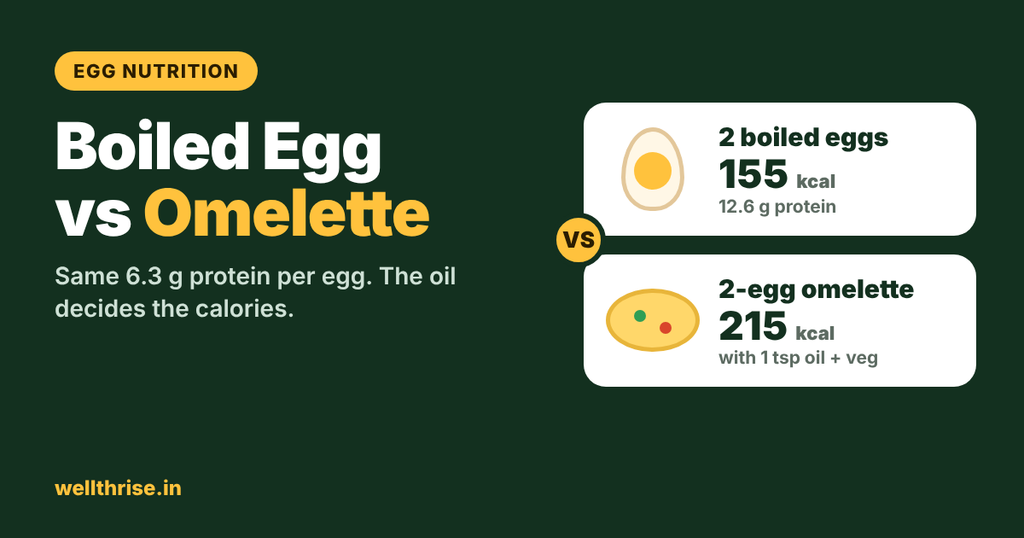
In the boiled egg vs omelette debate, a boiled egg is the healthier everyday choice if you’re counting calories: about 78 kcal and 6.3 g protein per egg, with nothing added.
An omelette has exactly the same protein. It only becomes “less healthy” because of what you add. Every teaspoon of oil adds about 40 kcal, butter about 36 kcal and a cheese slice about 60 kcal. A veggie omelette made with ½ teaspoon of oil is nearly as light as boiled eggs, and has more fibre and vitamins.
- 12.6 g protein · 10.6 g fat
- Zero added fat, easy to carry
- Best for weight loss and tiffins
- 13.3 g protein · 15.1 g fat
- Onion, tomato and chilli add fibre
- Every extra teaspoon of oil: +40 kcal
Egg calorie and protein calculator
Pick how you make your eggs: boiled, omelette, bhurji or half fry. This boiled egg vs omelette calculator adds up the egg, the cooking fat and any extras so you can see where the calories really come from.
🍳 Build your egg breakfast
Tap a preset or set your own. Numbers update instantly.
Pure egg, nothing added.
Estimates use USDA values for a 50 g egg (78 kcal, 6.3 g protein, 5.3 g fat; one white 17 kcal, 3.6 g protein) and assume you eat all the fat in the pan. Oil ~40 kcal, ghee ~45 kcal and butter ~36 kcal per teaspoon; cheese slice ~60 kcal.
Boiled egg vs omelette: nutrition compared
Here’s how common Indian egg breakfasts stack up, using 2 standard (~50 g) eggs unless stated.
| Breakfast | Calories | Protein | Fat |
|---|---|---|---|
| 2 boiled eggs | 155 kcal | 12.6 g | 10.6 g |
| 2 poached eggs | 155 kcal | 12.6 g | 10.6 g |
| Plain omelette, 2 eggs + ½ tsp oil | 175 kcal | 12.6 g | 12.9 g |
| Masala omelette, 2 eggs + 1 tsp oil + onion, tomato | 215 kcal | 13.3 g | 15.1 g |
| Egg-white omelette, 1 egg + 3 whites + ½ tsp oil | 149 kcal | 17.1 g | 7.7 g |
| Egg bhurji, 2 eggs + 2 tsp oil + onion, tomato | 255 kcal | 13.3 g | 19.6 g |
| Cheese omelette, 2 eggs + 2 tsp butter + 1 slice | 287 kcal | 16.6 g | 23.8 g |
| 2 half fry eggs, 2 tsp oil | 235 kcal | 12.6 g | 19.6 g |
The protein barely moves. What changes is the fat: a heavy cheese omelette can have almost twice the calories of the same two eggs boiled.
How much protein is in 1 egg?
One standard egg (about 50 g) has about 6.3 g of protein, whether it’s boiled, poached or made into an omelette. Cooking doesn’t reduce the protein. Here’s how it adds up:
- Egg white: about 3.6 g protein and just 17 kcal, with almost no fat.
- Egg yolk: about 2.7 g protein and 55 kcal. It also carries most of the egg’s vitamins A, D and B12, plus choline.
- Size matters: a small egg (~44 g) has about 5.5 g protein; a large one (~57 g) about 7.2 g.
💡 Cooked beats raw. Your body absorbs roughly 90% of the protein in a cooked egg but only about 50% from a raw egg, according to research cited by Australian Eggs. Boiled and omelette are both fine; raw eggs in shakes are not a protein hack.
Boiled egg vs omelette for weight loss
Boiled wins on calories. There’s no oil, so two boiled eggs give you the same protein as an omelette for roughly 20 to 130 fewer calories, depending on how much fat goes in the pan. They’re also easy to portion and carry to work.
That said, a vegetable omelette with ½ teaspoon of oil in a non-stick pan is a perfectly good weight-loss breakfast. The onion, tomato, spinach or capsicum add fibre and volume that help keep you full. What sinks an omelette is butter, cheese and a generous pour of oil, not the egg.
Want to see what those extra calories mean in exercise? Try our calorie burn calculator.
Boiled egg vs omelette: which should you choose?
Losing weight
Boiled eggs, or a veggie omelette with ½ tsp oil. Skip butter and cheese.
Pick: boiledGym and muscle gain
Protein is the same either way. An omelette makes it easy to add extra whites for more protein without many calories.
Pick: either, add whitesOffice tiffin or travel
Boiled eggs travel well. Keep them cool and eat within a few hours if unrefrigerated.
Pick: boiledKids and fussy eaters
A soft veggie omelette sneaks in vegetables. Cook eggs fully for young children.
Pick: veggie omeletteHigh cholesterol or diabetes
Ask your doctor how many whole eggs suit you. Egg-white omelettes with vegetables are a common low-fat option.
Pick: ask your doctorShort on time
Boil a batch for the week. Peeled or unpeeled, they keep in the fridge for about a week.
Pick: boiledHow to make a healthier omelette
- Use a non-stick pan and measure ½–1 teaspoon of oil instead of pouring.
- Load it with vegetables: onion, tomato, spinach, capsicum, mushroom or grated carrot.
- Swap one whole egg for two whites to add protein and cut fat.
- Skip the butter and cheese, or use a little paneer for extra protein.
- Cook on medium heat and avoid browning or burning, which can damage some heat-sensitive nutrients.
- Pair it with whole-grain roti or toast rather than white bread and butter.
How long to boil an egg
Lower eggs into water that’s already at a rolling boil, then time them:
| Time | Result |
|---|---|
| 6 minutes | Soft-boiled: runny yolk, just-set white |
| 8 minutes | Jammy: soft, custardy yolk |
| 10–12 minutes | Hard-boiled: fully set yolk |
Move them straight into cold water to stop the cooking and make peeling easier. A grey-green ring around the yolk just means it was overcooked. It’s harmless, but 10–12 minutes is enough.
Eggs and cholesterol: how many a day?
An egg yolk has about 185 mg of cholesterol, which is why eggs used to be limited. Current guidance is more relaxed. The American Heart Association’s 2019 advisory says healthy people can include up to one whole egg a day in a heart-healthy diet, and suggests older adults with normal cholesterol can have one to two a day.
How you cook matters as much as how many you eat: eggs fried in butter alongside processed meats are a very different meal from boiled eggs with vegetables.
Frequently asked questions
Boiled egg vs omelette: which is healthier?
For most people, the boiled egg, because nothing is added. The protein is the same. An omelette made with vegetables and ½ teaspoon of oil is almost as healthy; one with butter and cheese can have nearly twice the calories.
How much protein is in 2 boiled eggs?
About 12.6 g of protein in two standard (~50 g) eggs, with roughly 155 kcal. Large eggs give about 14 g.
Does an omelette have less protein than a boiled egg?
No. Cooking method doesn’t change the protein. A 2-egg omelette and 2 boiled eggs have the same 12.6 g; vegetables or cheese in the omelette can add a little more.
Is omelette good for weight loss?
Yes, if you keep the oil to ½–1 teaspoon and add vegetables. Butter, cheese and lots of oil are what make an omelette fattening, not the eggs.
Boiled egg vs omelette after the gym: which is better?
Either works. Total protein is what matters. An egg-white omelette (1 whole egg + 3 whites) gives about 17 g protein for around 150 kcal.
Is it OK to eat eggs at night?
Yes. Eggs are a light, protein-rich dinner option. A boiled egg or veggie omelette is easier on the stomach than a heavy, oily bhurji late at night.
How many boiled eggs can I eat a day?
For most healthy adults, one whole egg a day fits a heart-healthy diet, per the American Heart Association, and older adults with normal cholesterol can have one to two. Extra egg whites add protein without cholesterol. If you have a medical condition, ask your doctor.
Last checked: 25 October 2026. Calorie figures are estimates. This is general nutrition information, not medical advice.
We write practical guides on money, tax, salary, wellness and India news. Rates, rules and dates come from official sources such as RBI, SEBI, the Income Tax Department, India Code and government notifications, linked in each article with the date we last checked them. We don’t accept payment to change what we write.
Our editorial policyReport an error