
Plastic Eggs or Just Old Eggs? How to Check if an Egg Is Fresh at Home
FSSAI says the viral signs of plastic eggs are just normal ageing. Here’s the 10-second water test it shared, an instant egg checker, and when an egg should go in the bin.
- Plastic eggs are a myth. FSSAI has said so since 2018, and repeated it in a video on X in late September 2026.
- A yolk that mixes with the white, a dry or rubbery feel, or a tough inner skin are signs of an old or badly stored egg, not a fake one.
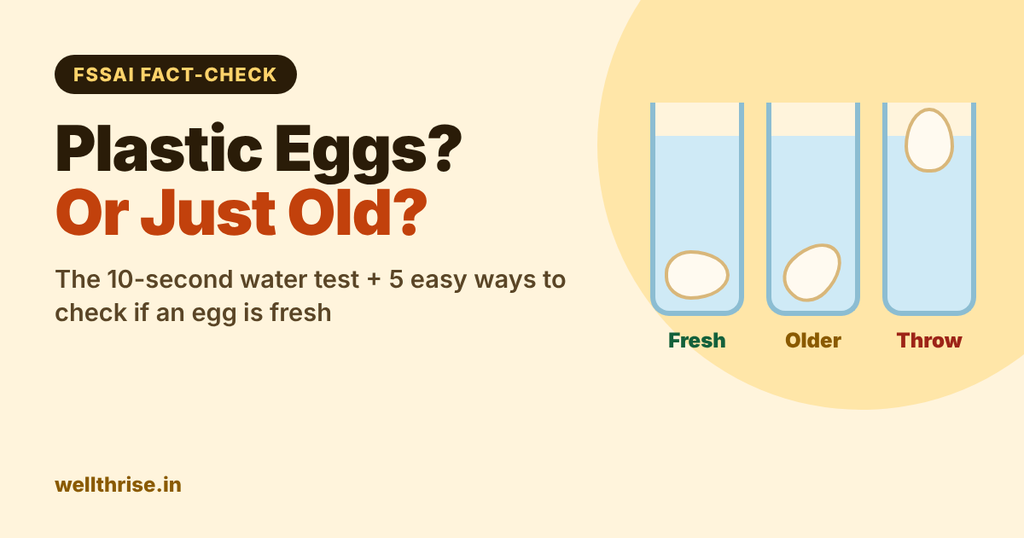
- Water test: a fresh egg sinks and lies flat. An older egg tilts or stands upright. An egg that floats is very old and best thrown away.
- Throw away any egg that is cracked, slimy or smells bad, whatever the water test says.
What FSSAI said about “plastic eggs”
Every few months a video goes viral claiming that plastic eggs are being sold in Indian markets alongside real ones. The usual “proof” is an egg whose yolk and white have run together, or one that looks dry and papery when cracked.
In late September 2026, the Food Safety and Standards Authority of India (FSSAI) posted a short video on its X account answering exactly this. Its message: when the yolk and white mix, or the inside looks less firm, that is what happens to a real egg as it ages or is kept in the heat. It does not mean the egg is plastic. FSSAI asked people not to let food rumours decide what they eat, and shared a simple water test to check freshness instead.
This isn’t new. Back in August 2018, FSSAI issued a guidance note calling plastic eggs, or any artificial eggs, a myth. It explained that eggs lose moisture over time, so the white and yolk shrink and mix, which can make an old egg look “fake”. It also pointed out the economics: a real egg costs a few rupees, while making a convincing fake would cost several times more.
The famous “egg factory” clips have been fact-checked too. The most-shared one, from China in 2017, showed toy eggs being made. Local police there clarified it at the time.
The FSSAI water test: what each result means
Fill a deep bowl or glass with water and gently lower the egg in. As an egg ages, moisture escapes through tiny pores in the shell and air takes its place. The air pocket at the wide end grows, so older eggs become more buoyant.
💡 The water test tells you an egg’s age, not whether it is safe or real. FSSAI itself calls it an indication only. It can’t detect plastic eggs either, simply because there aren’t any to detect. A sinking egg can still be unsafe if it’s cracked or smells off, so always do the sniff test too.
Instant Egg Checker
🥚 Is my egg OK to eat?
Tap what you see. The verdict updates as you go. You don’t need to answer everything.
- Start with the water test. It takes 10 seconds.
6 viral signs of plastic eggs, explained
Tap a card to see what’s really going on.
Other ways to check an egg at home
Sniff test
Crack the egg into a separate bowl first, not straight into your dish. A rotten egg has an unmistakable sulphur smell. If it smells off, throw it away. No other test overrides this.
Most reliablePlate test
Crack it onto a flat plate. A fresh egg has a domed yolk and a thick white that stays close around it. An older egg spreads wide and the yolk sits flat.
Reliable for freshnessWater test
Sinks flat = fresh. Tilts or stands = older. Floats = very old. Good for sorting a whole tray quickly before you crack anything.
Tells age, not safetyPhone torch test (candling)
In a dark room, hold the egg’s wide end against your phone torch. A small air pocket means fresh. A large one means older. Dark patches can be a blood spot or spoilage.
Useful, takes practiceShake test
Hold it near your ear and shake gently. A sloshing sound suggests a thin, older white. It’s a rough guide only.
Least reliableHow to store eggs in an Indian kitchen
| Do | Why |
|---|---|
| Refrigerate as soon as you get home, on a shelf inside, not in the door | The door warms up every time it opens. Cold, steady temperature slows ageing and bacteria. |
| Keep them in the tray or carton, pointed end down | Keeps the yolk centred and stops eggs absorbing smells from onions, fish or curry. |
| Don’t wash eggs before storing. Wipe off dirt with a dry cloth and wash just before use. | Washing removes the shell’s natural protective coating and can pull bacteria in through the pores. |
| Buy smaller packs in summer if you don’t refrigerate | Eggs age much faster in Indian heat than in a fridge. |
| Once chilled, don’t leave eggs out for hours | A cold egg brought into a warm kitchen “sweats”, and moisture on the shell helps bacteria move in. |
| Keep boiled eggs in the fridge and eat them within a week | Cooking removes the shell’s protective coating, so boiled eggs spoil faster than raw ones. |
At the shop, pick eggs from a busy counter where stock moves fast, avoid trays kept in direct sun, and check every egg for hairline cracks before you pay. In peak summer, buy eggs more often and in smaller lots, because they age much faster in the heat.
- it floats in water
- the shell is cracked, leaking, slimy or powdery
- it smells sour or of sulphur when cracked
- the white or yolk has pink, green, black or iridescent patches
Eating eggs safely
The real risk in your kitchen isn’t plastic eggs. It’s bacteria such as Salmonella, which can sit on the shell or occasionally inside the egg. Proper cooking kills it. And don’t let the scare put you off: eggs remain one of the cheapest sources of protein in India.
- Cook until the yolk and white are firm for young children, older adults, pregnant women and anyone who is unwell.
- Avoid raw-egg drinks and homemade raw-egg mayonnaise, especially in hot weather.
- Wash your hands and the bowl after handling raw eggs, and don’t let raw egg touch ready-to-eat food.
- Use older eggs for fully cooked dishes such as hard-boiled eggs, bhurji, cakes or curry. Save the freshest ones for poached or half-fry.
Frequently asked questions
Are plastic eggs sold in India?
No. FSSAI has called plastic eggs a myth since 2018, and repeated in September 2026 that the “signs” shared online are normal changes in ageing eggs. Viral factory videos have been traced to toy-egg production.
How can I tell plastic eggs from real eggs?
You don’t need to: there’s no evidence plastic eggs have ever been sold in India. What people usually spot is an old egg with a thin white, a mixed-in yolk or a dry, papery look. Use the water, sniff and plate tests above to check freshness instead, and throw away any egg that smells bad or is cracked.
Does a floating egg mean it’s rotten?
It means the egg is very old, because its air pocket has grown large. It isn’t always rotten, but it’s past its best and more likely to have spoiled, so it’s safest to throw it away.
Why do the yolk and white mix in some eggs?
The membrane holding the yolk weakens as an egg ages, and faster in heat. When cracked, the yolk breaks and blends with a thin, watery white. It’s a sign of an old or warm-stored egg, not a fake one.
How long do eggs last outside the fridge in India?
Much less than in a fridge, especially in summer. If you don’t refrigerate, buy small quantities, keep them somewhere cool and shaded, use them within a few days, and do the water and sniff tests before using.
Are brown eggs fresher or healthier than white eggs?
No. Shell colour depends on the hen’s breed. Freshness depends on age and storage, and nutrition is broadly similar.
Should I wash eggs before keeping them in the fridge?
No. Washing removes the shell’s natural coating. Wipe off visible dirt with a dry cloth, store them, and rinse just before you crack them.
Last checked: 25 October 2026. This article is general food-safety information, not medical advice.
We write practical guides on money, tax, salary, wellness and India news. Rates, rules and dates come from official sources such as RBI, SEBI, the Income Tax Department, India Code and government notifications, linked in each article with the date we last checked them. We don’t accept payment to change what we write.
Our editorial policyReport an error